Trad Climbing Protection Ranked 2026
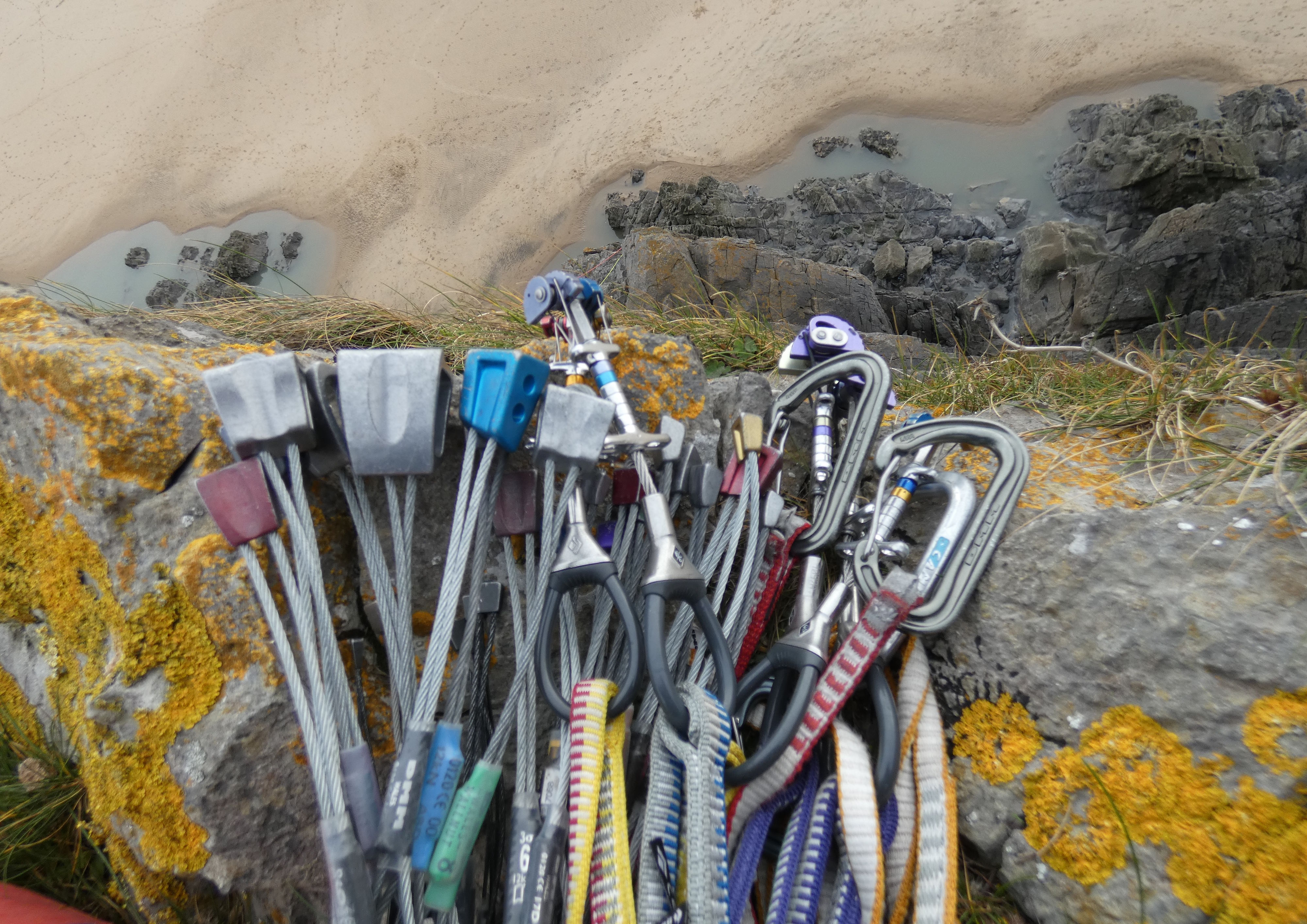
Understanding and selecting the optimum equipment is a key part to success in traditional multi-pitch climbing. Understanding the different types of climbing gear available, and their respective strengths and weaknesses can make a huge difference to both the safety and chance of success on a route. This list is my personal opinion on the best trad gear. S and A tier gear is what I always carry, B tier gear generally gets racked for long routes. C and D tier gear is generally avoided with the exception of micro nuts (because they weight next to nothing) and sky hooks occasionally for hard slab climbing, more because they give you something to do, to take your mind of the fact that if you feet slip, you may loose a lot of forward facing skin.
Please comment and disagree...Head over to the youtube video for this post and leave a comment if you disagree, or don't like my placements. Yes the Hex placement is a bit shallow, hex's suck.
What is missing? Big Bros are missing from the list because I've not used them. They are not sold in the EU because they are not CE certified (They seem decent thou). The Link Cam is also missing, but they don't make them anymore and they didn't have a great reputation (a ridgid stem cam realy limits safe placement options).
What is strong? With each type of climbing protection, the typical manufacturers strength ratings is also listed using popular bands in 2025. Equipment made a long time ago or in less regulated countries may be weaker. Age and wear will also reduce strength. European standards (EN12276) mandate cams are strong enough to hold at least 5Kn. However you really want to be using gear that can hold 7 Kn or more because a factor 1 fall in a multi-pitch scenario can generate 6 kn on gear. Petzl have some good videos showing fall factors and impacts on their site.
In a multi-pitch scenario, falls can easily reach or exceed factor 1, if the leader falls before placing any or very much gear early on. Clipping the highest piece of gear on a belay or placing gear and cliping it before moving away from the belay stace can help prevent factor 2 falls. Climbers call this a "Jesus piece". In any case, having stronger gear in these scenarios is important.
Traditional Climbing Gear Ranked by Tier
S / Top Tier:
A / Very Good
B / Decent
C / Not Great
D / Bad
Angel Cam B Tier / Decent
- ✅ Huge range
- ✅ Works in parallel or offset cracks
- ✅ Great strength
- 🛑 Expensive
- 🛑 Hard to remove (and re-rack)
- 🛑 Harder to control / set cam lobes
- 🛑 Thumb loop tangles with wiregates
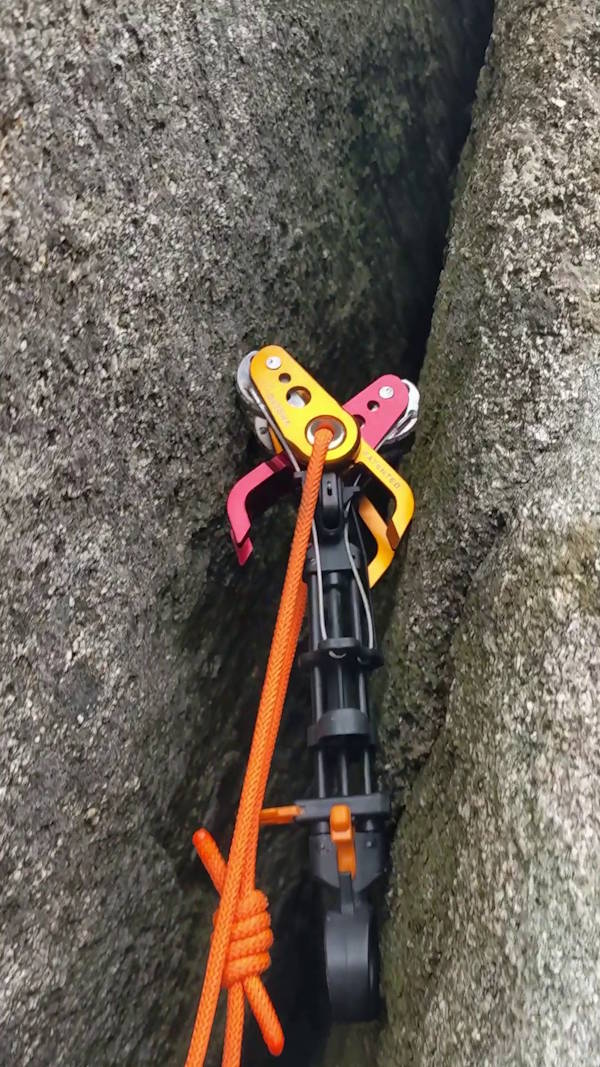
The angel cam by Alternative Current has normal camming lobes and a second central expandable ratchet type system. This gives the cam a huge expansion range and the benefit of a great weight to max range ratio. However the reality is it's a complicated device to use, especially when removing it. It is also hard to get the cam properly set because the end lobes are small (on the smaller angel cam) and so in large cracks they can be a bit under cammed if you're not careful. In summary it's a fun, but weighty and very expensive option. I'm currently using it mainly to build anchors where the single angel cam has the range of 3 medium / large cams and can work in offset placements where a normal cam won't work, so having one on the harness does provide a lot of flexibility at a belay. Also the larger size one has larger lobes so the under / overcamming may be less of an issue because there will be more flexabiliy in the range of the end lobes.
| Specification | Value | Assessment |
|---|---|---|
| Weight | 276 or 393 g | Heavy |
| placement Range | 26 - 145 mm | Excellent |
| Single Range Flexibility | 74 or 99 mm | World Class |
| Typical Strength | 11 Kn | Very Good |
| Typical cost (2025) | £200 | Very Expensive |
Ballnuts B Tier / Decent
- ✅ Active hold in tiny placements
- ✅ Light
- ✅ Strong enough
- ✅ Versatile
- 🛑 Expensive
- 🛑 Hard to remove after fall
- 🛑 Less effective in soft rock
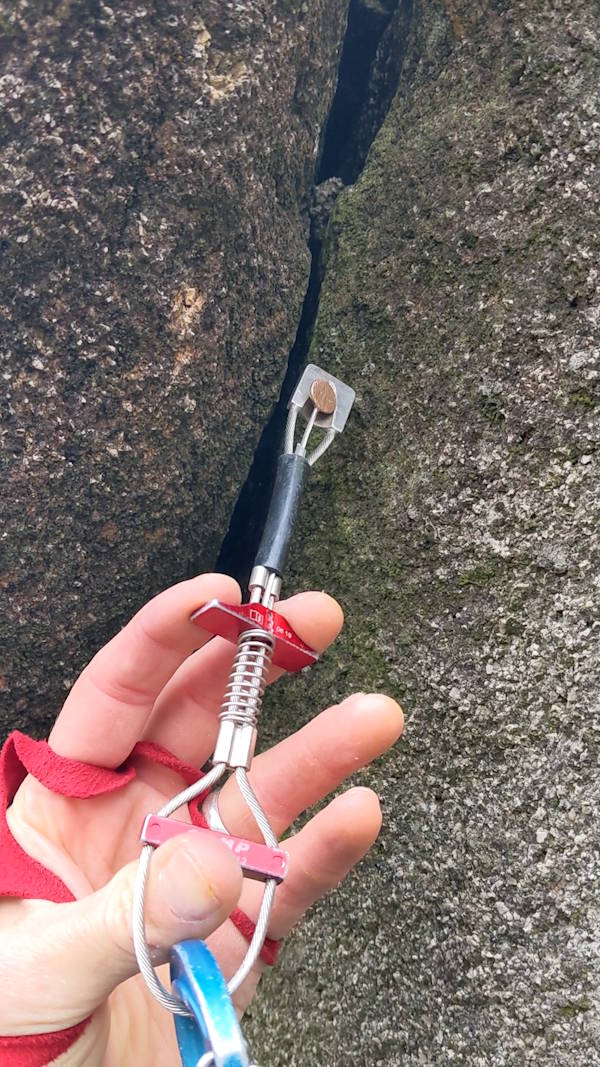
Sometimes called sliders, ball nuts are a single nut with a sliding surface on one side, meaning the nut essentially expands slightly and therefore holds better. The one key strength is, the protection is partially active and so can hold better than a normal nut, but can have a much smaller profile than a cam. It's a niche middle ground piece of gear, however it can provide some extra options on a trad rack, especially on hard routes with thin cracks. The smaller 2 sizes offer some placement options where a micro cam won't fit. Given their weight, carrying one or both these two size is worthwhile in my view. The numer one (smallest) has a weaker rating than the others.
| Specification | Value | Assessment |
|---|---|---|
| Weight | 29 to 73 g | Very Light |
| placement Range | 3 mm to 18 mm | Good |
| Single Range Flexibility | 2.7 to 7.2 mm | Decent enough |
| Typical Strength | 7 to 8 Kn | Decent |
| Typical cost (2025) | £55 | Not cheap |
Brass Nuts A Tier / Very Good
- ✅ Ultra Light
- ✅ Strong enough
- ✅ Grip well
- ✅ Surprisingly versatile
- 🛑 Marginal at small sizes
- 🛑 More expensive than nuts
- 🛑 Don't work in parallel cracks
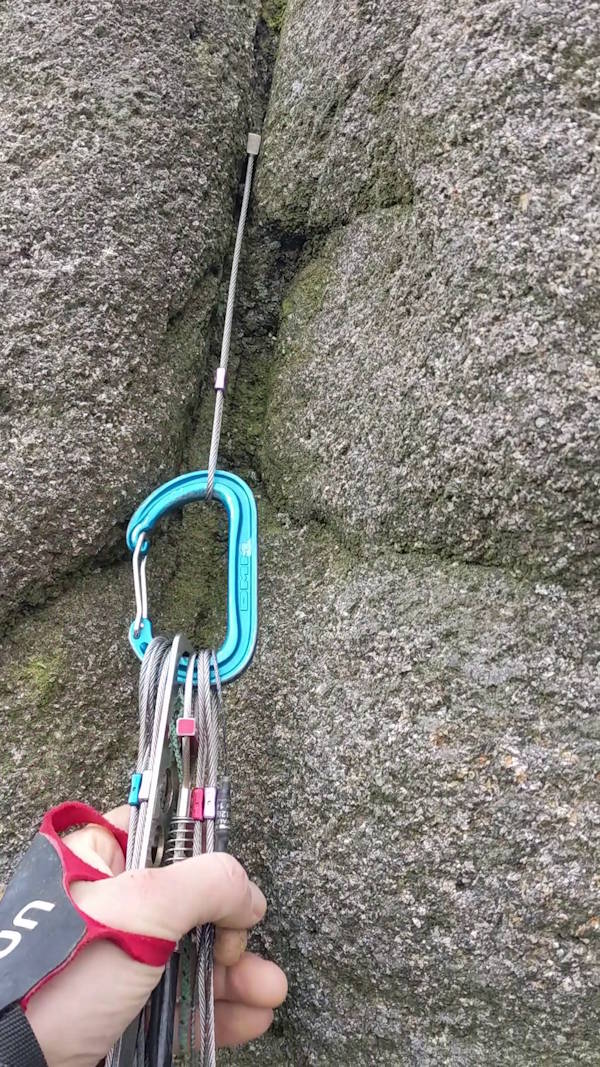
Small brass wires are often called RPs after their inventor Roland Pauligk. Brass nuts can also be called IMPs, which stands for Immaculate Marginal Protection. As the name suggests they are made of brass or commonly a brass alloy, sometimes incorporating other materials like silicone to strike a balance between being strong enough to catch short falls but soft enough that the rock will bite into them holding them in place. They are marginal, and can't take very big falls but offer respectable strength for the size of crack / placement they work in. Given they weight very little they are on my, "don't leave the ground without them" list. They can be brought in offset shapes as well, I find at the small size it doesnt matter too much.
| Specification | Value | Assessment |
|---|---|---|
| Weight | 4 to 16 g | Exceptionally Light |
| placement Range | 3 mm to 18 mm | Good |
| Single Range Flexibility | n / a | |
| Typical Strength | 5 to 7 Kn | Passable to Decent |
| Typical cost (2025) | £18 | Okay |
Four lobe cams S Tier / Top Tier
- ✅ Strong
- ✅ Large range
- ✅ Actively holds position
- ✅ Quick and easy to place
- 🛑 Expensive
- 🛑 Weighty
- 🛑 Can walk or invert
- 🛑 Less durable
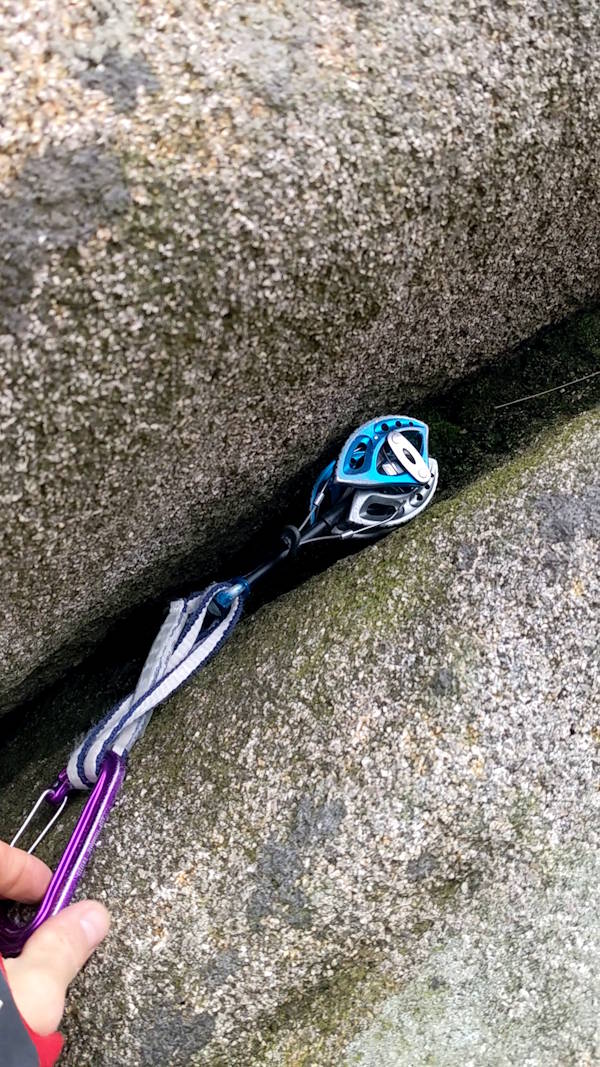
Cams are a main component of a good climbing rack. Many routes can be climbed with just nuts, but for anything with lots of parallel sided cracks, then cams are essential. A key advantage of a cam is its ability to protect parallel sided cracks and even pockets. Each cam has a range it can protect, this means it's easier and quicker to get a cam into many of the normal placements a nut can protect. But before ditching all the nuts on a trad rack, it's helpful to be aware that there are a number of significant downsides to cams. Firstly they are much heavier than passive protection. In addition, cams are considerably more expensive, typically 5 times the price of a nut or more. Cams also exert a lot of force on the rock, meaning they can break the rock and fail in certain placements like flakes, which otherwise may not break if a nut was used. Cams can also 'walk' deeper into some cracks making them hard to get out later. Durability is another major drawback. Personally I have retired 5 cams from 3 different manufacturers in a bad 2 year period. I still have and use the original nuts I brought 20 years ago (except the number 8 someone dropped down a crag). None of the cams I retired took a fall. One had a lobe pop off when I took it off my harness. Three had a retaining ring erode and the heads mis-align. One broke a wire and spring. A final positive consideration for cams is that they can hold their position better than nuts in many instances. A nut will have gravity pull it one way and the rope shake and loosen it in another direction, cams however actively grip the rock, reducing this.
| Specification | Value | Assessment |
|---|---|---|
| Weight | 75 - 299 g | Heavy |
| placement Range | 13 - 114 mm | Good |
| Single Range Flexibility | 8 mm to 46 mm | Good |
| Typical Strength | 9 - 14 Kn | Super Strong |
| Typical cost (2025) | £ 65 | Expensive |
Half nuts C Tier / Not Great
- ✅ Light
- 🛑 Harder to place then normal nuts
- 🛑 Weaker than normal nuts
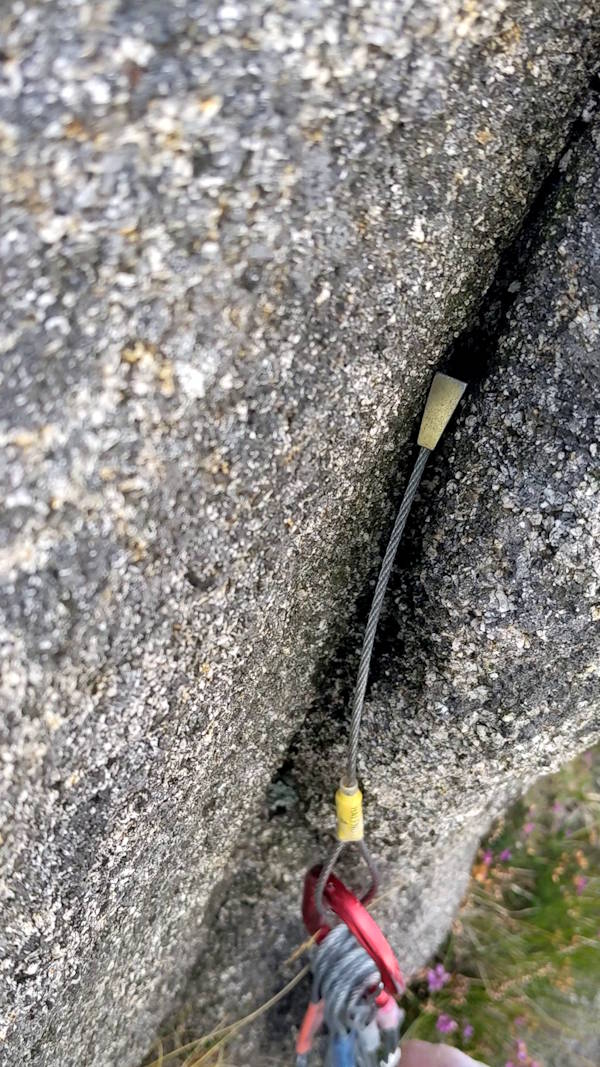
Half nuts are, as the name suggests, a nut with roughly half the profile of a normal nut. The reduced width makes them ideal for shallow cracks, pin scars and as result of the smaller shape they weigh about 40% less than normal nuts. However they are also quite a lot weaker and the smallest size is only rated to 4Kn which will only protect quite a small fall with a low fall factor. Given normal nuts represent a reasonably small amount of the weight of a rack, the benefit of half nuts is modest. They will work in some placements normal nuts wont hold thou. Certainly these are niche gear.
| Specification | Value | Assessment |
|---|---|---|
| Weight | 10 - 46 g | Very Good |
| placement Range | 6.7 - 24.5 mm | Fine |
| Single Range Flexibility | n / a | |
| Typical Strength | 4 - 9 Kn | Marginal to Good |
| Typical cost (2025) | £12 | Cheap Enough |
Hex D Tier / Bad
- ✅ Light for size
- ✅ Reasonably Cheap
- ✅ Strong
- 🛑 Noisy
- 🛑 Auto snag a lot
- 🛑 Heavy in absolute terms (due to size)
- 🛑 Don't work in parallel cracks
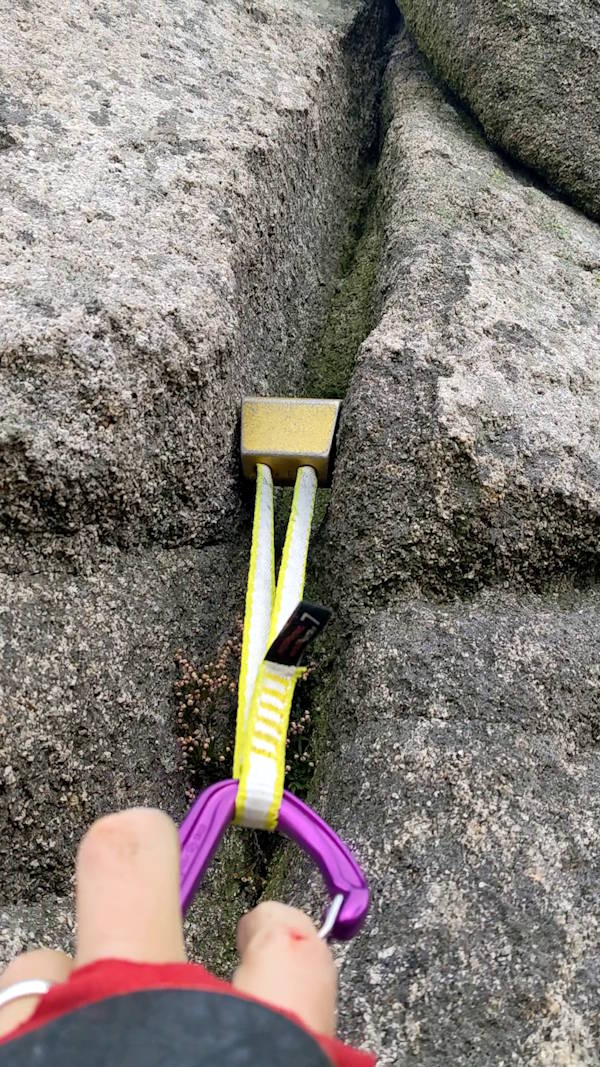
A hexcentric or hex is, as the name suggests, a hexagonal shaped piece of metal with either, a stiff metal wire just like nuts, or a soft and flexible but strong dyneema sling built into it (nylon cord can also be used). Typically Hexes come in larger sizes than nuts and are typically hollow to save weight (but are still weighty gear). It's a form of passive protection and essentially acts like a large nut. The advantage is its cheap cost and high strength. The disadvantages of hexes are the noise they make when hanging from the harness, knocking into other gear. Hex's are sometimes dubbed cow bells for this reason. In addition, a set of large hexes add significant weight, with little flexibility on placement compared to a cam. They are a useful addition to a climber's rack if the route requires lots of larger pieces, they are also good on easier routes where you need to protect low angle broken rock, like when scrambling on ridges. However for most routes they are not worth the weight and noise they bring.
| Specification | Value | Assessment |
|---|---|---|
| Weight | 34 - 156 g | Weighty |
| placement Range | 31 - 73 mm | Okay |
| Single Range Flexibility | n / a | |
| Typical Strength | 14 Kn | Super Strong |
| Typical cost (2025) | £22 | Reasonably Priced |
Kong Gipsys D Tier / Bad
- ✅ Huge Range
- 🛑 Hard to rack
- 🛑 Hard to place
- 🛑 Not as secure as a cam
- 🛑 Heavy
- 🛑 Could place upside down and die
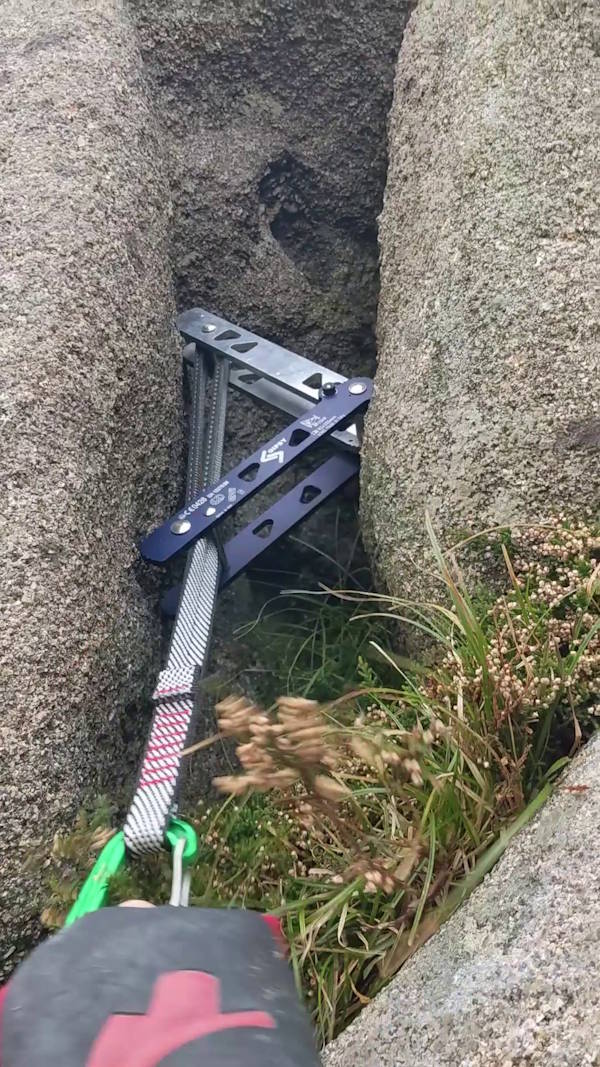
Originally called a Blitz and made by Cassin in the late 1980's. Climbing manufacturer Kong made an attempt to revive them and released 3 devices branded gipsy. With their simple design they have a great expansion range and at larger sizes they are lighter than a similar sized cam. So why aren't these popular? There are probably three main reasons, firstly they are easy to place incorrectly, in a position they would not hold (dangerious). Secondly they are harder to rack on the harness. Ideally they need a special piton/ice screw holder like the kong owl or a DMM vault, or you need to clip them on with a carabina that will need unclipping from the device before placing (basically they are super awkard). The final issue is they are slower to place than a cam and fiddly to get set in anything other than perfectly parallel cacks because they need 6 points of contact. So really the Gipsy just makes sense for vertical, wide and parallel cracks, which makes it a niche bit of gear. Kong have understandably discontinued these now.
| Specification | Value | Assessment |
|---|---|---|
| Weight | 240 - 485 g | Heavy |
| placement Range | 52 - 205 mm | Brilliant |
| Single Range Flexibility | 113 mm | Brilliant |
| Typical Strength | 15 - 18 Kn | Super Strong |
| Typical cost (2025) | £100 | Not sold anymore |
Micro cams A Tier / Very Good
- ✅ Strong enough
- ✅ Light
- ✅ Active hold
- 🛑 Expensive
- 🛑 Smaller sizes are marginal
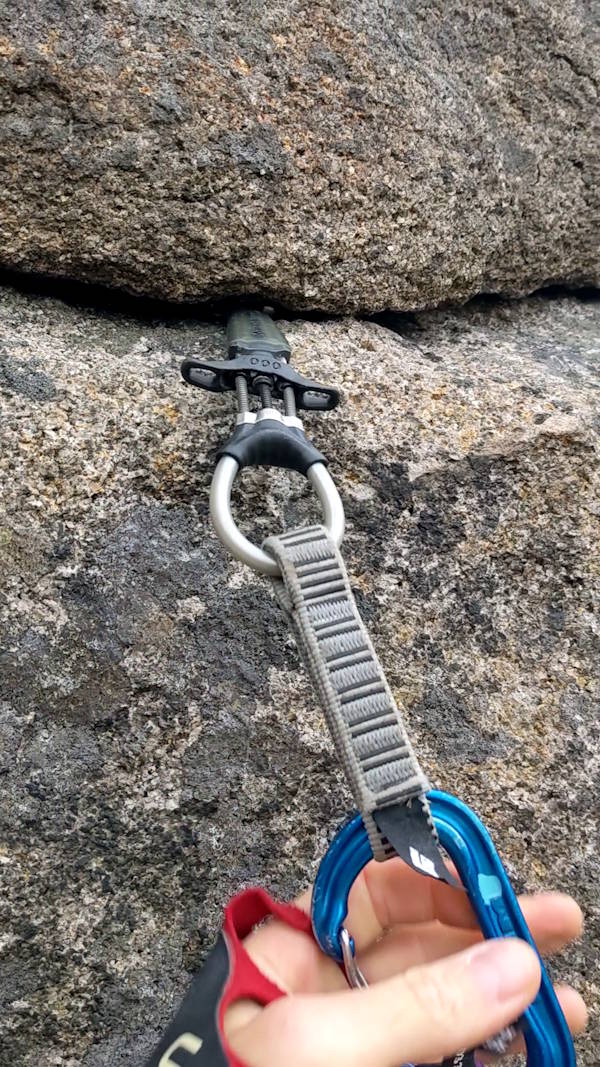
Micro cams are like cams but much smaller. They can have a 3 or 4 lobe design and are light in weight but surprisingly strong. As of 2025 all the main cam manufacturers have microcams that have a minimum strength of 5 or 6Kn on their smallest size. Some small sizes on older designs are weaker. Normal falls are in the 3-5Kn range with bigger falls in the 5-7Kn range so typically, the strength of a microcam will be enough and the fact they can fit into a tiny crack means they are an A tier choice for me. Easy climbs still have small cracks, and given the cams weigh anything from 45 grams to around 75, having a few on the harness makes sense to me.
| Specification | Value | Assessment |
|---|---|---|
| Weight | 42 - 75 g | Quite Light |
| placement Range | 6.7 - 37.4 mm | Okay |
| Single Range Flexibility | 6.5 mm to 15 mm | Okay |
| Typical Strength | 5 to 12 Kn | Okay to Strong |
| Typical cost (2025) | £85 | Expensive |
Micro nuts C Tier / Not Great
- ✅ Ultra Light
- ✅ Cheap Enough
- 🛑 Weak at smaller sizes
- 🛑 Not very versatile
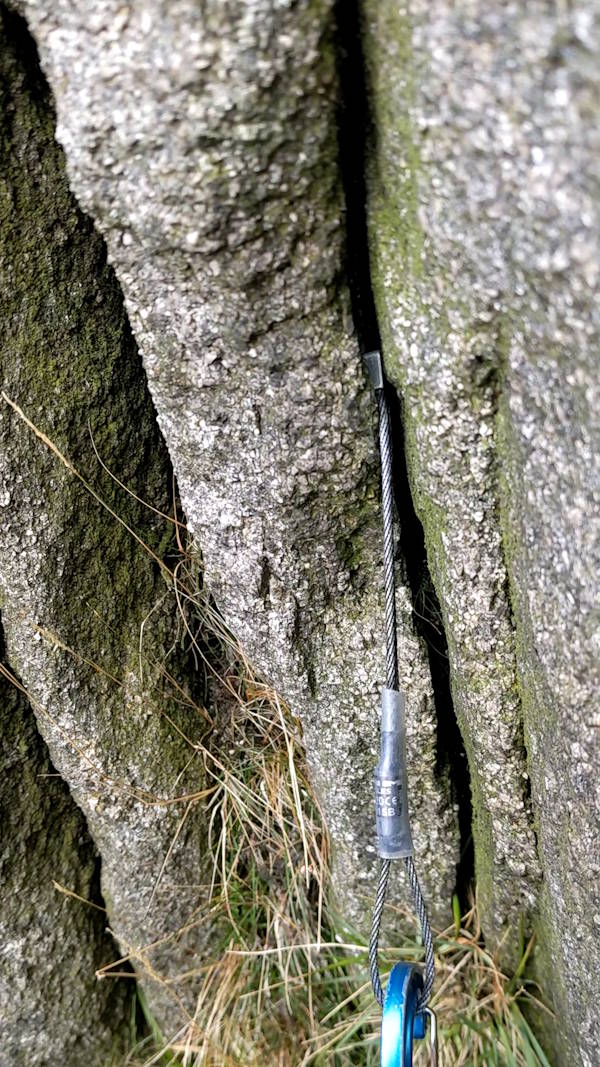
Micronuts are small nuts which weigh as little as 5 grams, up to a still very light 10g and hold loads of 2 to 6 Kn. Brass wires tend to be stronger and therefore 9 times out of 10 I place a brace wire over a micro nut, but given a whole micronut set has the same weight as a swig of water, I do carry them on my rack at all times. Occasionally their narrow profile does give a good placement where nothing else will, but the smaller sizes would barely catch even a small fall on their own.
| Specification | Value | Assessment |
|---|---|---|
| Weight | 5 to 10 g | Ultra Light |
| placement Range | 4 - 13.9 mm | Niche |
| Single Range Flexibility | n / a | |
| Typical Strength | 2 to 6 Kn | Scary weak to Okay |
| Typical cost (2025) | £ 12 | Cheap |
Nuts A Tier / Good
- ✅ Strong
- ✅ Light
- ✅ Versatile
- 🛑 Don't work in parallel cracks
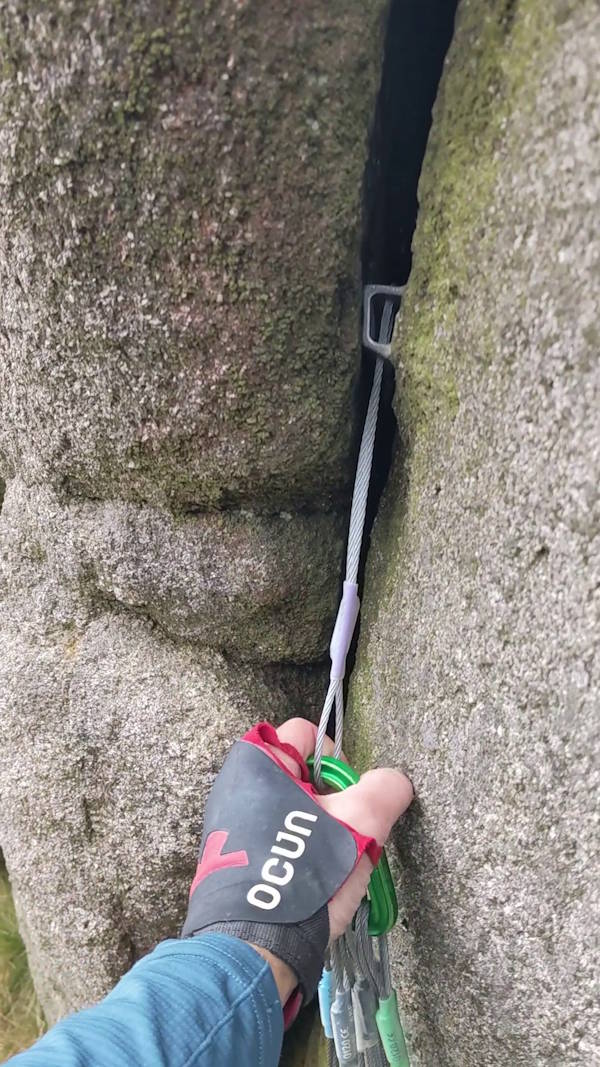
The backbone of traditional protection are nuts, sometimes called wires, these are metal lumps on the end of a metal wire loop, and come in many shapes and sizes. They can be slotted, threaded and generally wedged into cracks, gaps or slots in rock, in such a way that they can catch a fall. There are 3 main factors to a climbing nut. Shape, size and metal type. These three factors also influence weight and strengths. Most nuts are designed to be used in a few orientations, i.e. they have a thin and thick side and usually also curve one way or the other. This makes them more versatile. Size is an obvious factor. Bigger nuts are for bigger gaps and have more strength, typically up to 12Kn. Most trad routes call for a rack of at least 10 different sized nuts. For most multi-pitch climbs, it's not un-common to take double this.
| Specification | Value | Assessment |
|---|---|---|
| Weight | 15 - 68 g | Pretty Light |
| placement Range | 14.3 - 37.4 mm | Good |
| Single Range Flexibility | n / a | |
| Typical Strength | 7 to 12 Kn | Strong |
| Typical cost (2025) | £ 10 | Cheap |
Offset Cams B Tier / Decent
- ✅ Strong
- ✅ Work in flared / unique placements
- 🛑 Expensive
- 🛑 Don't work in parallel cracks
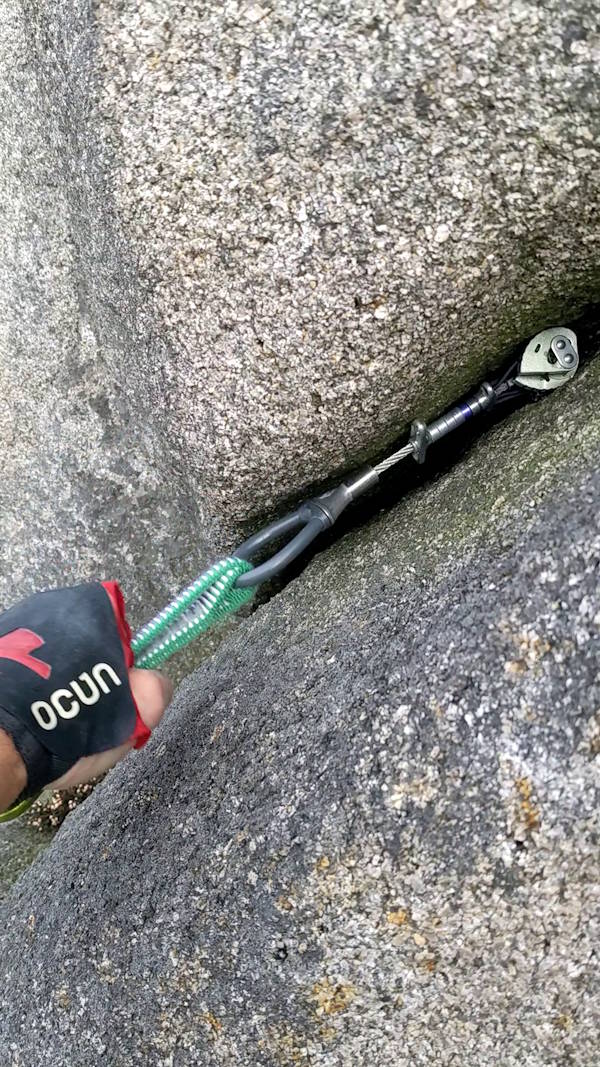
Offset cams have one set of camming lobes smaller than the other and are designed for irregular, flared or tapering cracks. At smaller sizes these can offer protection options that aren't available or secure for normal cams and they will hold in places where an offset nut wouldn't work. On routes that have "good" protection offset cams are not needed. However for certain areas that are notoriously hard to protect (for example some granite slabs), then the offset cam can be a blessing on the harness.
| Specification | Value | Assessment |
|---|---|---|
| Weight | 45 to 80 g | Okay |
| placement Range | 10.4 to 40.6 mm | Good |
| Single Range Flexibility | 6 mm to 17mm | Good |
| Typical Strength | 5 to 10 Kn | Okay to Good |
| Typical cost (2025) | £ 80 | Expensive |
Offset Nuts S Tier / Top Tier
- ✅ Strong
- ✅ Light
- ✅ Ultra versatile
- 🛑 Don't work in parallel cracks
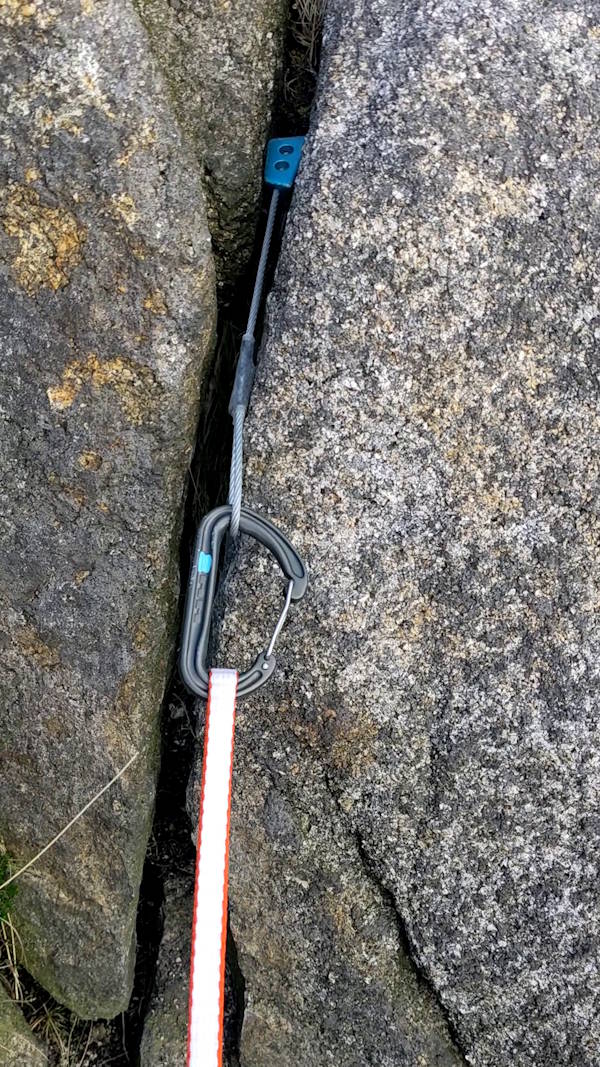
Offset nuts tapper on one side, the end result is they fit into more placements than normal nuts. Traditionally people add a rack of normal nuts and then add offsets, but arguably offset nuts are far more useful. The lower profile on one side typically allows for more contact with the rock in flared crack placements and the square nature of conventional nuts often means one corner takes a bit more load than would be ideal. For me the offset nuts get some of the most use on my rack and I wouldn't climb a mountain without them. Cost, weight, value for money, ease of use, these are a real winner.
| Specification | Value | Assessment |
|---|---|---|
| Weight | 27 - 56 g | Light |
| placement Range | 12 to 30 mm | Okay |
| Single Range Flexibility | n / a | |
| Typical Strength | 12 Kn | Very Strong |
| Typical cost (2025) | £ 14 | Cheap |
Sky hook D Tier / Bad
- ✅ Light
- ✅ Unique placement option
- 🛑 Very weak
- 🛑 Not really climbing protection
- 🛑 Duct tape often needed to hold it
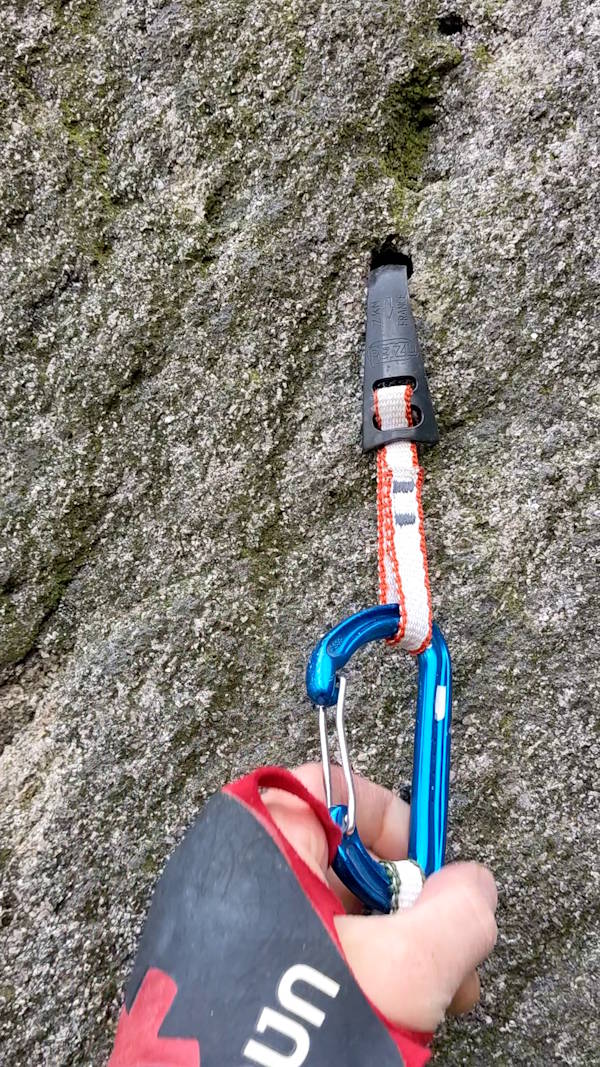
A sky hook is a small metal hook with a sling or cord. It can be used to hook over flakes, ledges or even placed in small pockets. It's primarily used for aid climbing, however it can also offer very marginal protection (i.e. more psychological confidence, than physical protection) in certain circumstances. Whilst certainly not a key piece in a trad rack, it can be deployed in an emergency, especially on slabby routes with limited features. I left them on my harness for a while but found they were forever getting snagged on things at the worst time, so now sky hooks generally stay at home unless there is a specific problem I need them for.
| Specification | Value | Assessment |
|---|---|---|
| Weight | 38 g | Light |
| placement Range | n / a | |
| Single Range Flexibility | n / a | |
| Typical Strength | 2 Kn | Super weak |
| Typical cost (2025) | £ 17 | Cheap Enough |
Sling S Tier / Top Tier
- ✅ Light
- ✅ Cheap
- ✅ Versatile
- ✅ Strong
- 🛑 Dependant on rocktype & route
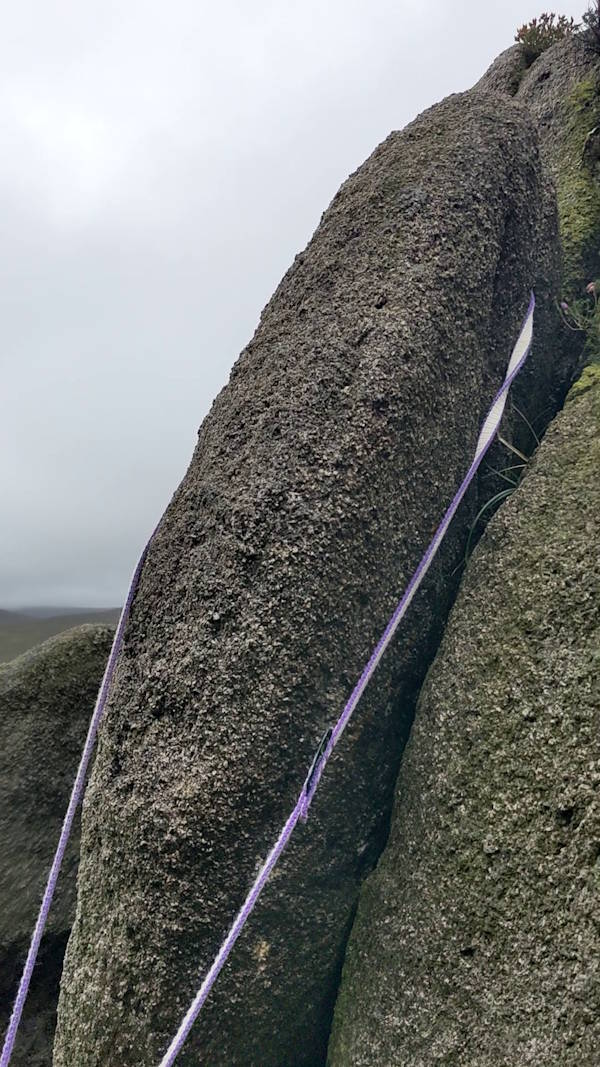
A key use of slings is as protection. Large rock spikes, flakes or wedged boulders can have slings passed around them so the rock will catch a fall. The level of protection provided by this method ranges from marginal on shallow spikes to 'bomber' i.e. very robust, on wedged boulders where the sling has no way to come out once clipped. Knotting or hitching slings does reduce their strength, however they are should still be plenty strong enough to catch most falls. Slings are strong, light, cheap and easy to use so I always carry a few sizes and a set of alpine draws as well. This alows treads and spikes to be protected with ease. On the Czech Republic and Germany border, climbers tie knots in slings and use the knotted end like a nut to catch falls without damaging the delicate sandstone. This is a much more niche and less straightforward (and more dangerous) use of slings as protection.
| Specification | Value | Assessment |
|---|---|---|
| Weight | 10 t 100 g | Very Light |
| placement Range | n / a | |
| Single Range Flexibility | n / a | |
| Typical Strength | 22 Kn | Very Strong |
| Typical cost (2025) | £5 to £10 | Very Cheap |
Three-Lobe Cam B Tier / Decent
- ✅ Strong
- ✅ Active
- ✅ Quick and easy to place
- ✅ Narrower head than 4 lobe cams
- 🛑 Expensive
- 🛑 Weighty
- 🛑 Pivot a lot more than 4 lobe cams
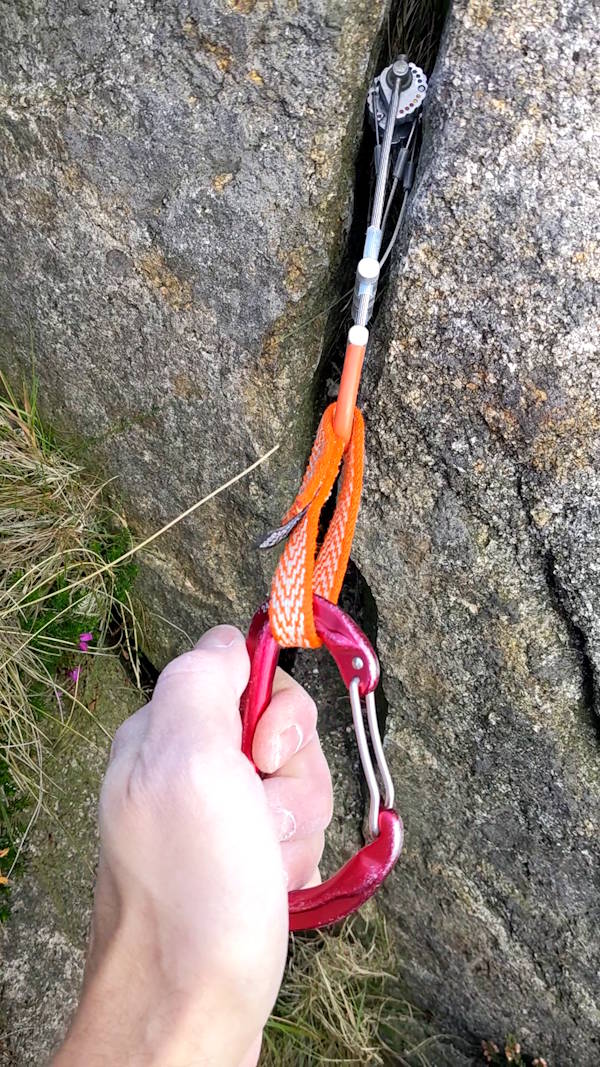
Three lobe cams, sometimes called TCUs, are surprisingly different from a "normal" cam. The larger central lobe means the cam has a narrow profile and needs less viable rock to work. The cam is also typically light but still strong. A 50g cam can give 8Kn of protection which is pretty incredible. On paper these are a winner, and many people love them, but that narrow head and single central camming lobe has a big drawback and that is twisting and walking. Even on a long runner these cams can twist and walk into cracks because the single middle lobe acts as a kind of pivot point. This means they can either lose their good placement or walk into a place which makes them hard or impossible to remove. To my shame the only cam I placed and couldn't retrieve was TCU on an easy single pitch route in Tenerife, it walked too deep into an irregular deep crack. The more likely outcome is the second will find a TCU is no longer in a secure place. That can happen after the climber is at the belay and the rope is being pulled (fine), but it can also happen on lead not long after placement (not okay). There are pro's and con's but I have fallen out of love with TCUs.
| Specification | Value | Assessment |
|---|---|---|
| Weight | 40 - 70 g | Light to Medium |
| placement Range | 8.5 - 33.5 mm | Good |
| Single Range Flexibility | 10mm | Okay |
| Typical Strength | 6 to 13 Kn | Good to Very Good |
| Typical cost (2025) | £ 60 | Expensive |
Totem Cam S Tier / Top Tier
- ✅ Strong
- ✅ Active
- ✅ Quick and easy to place
- ✅ Have some strength on just 2 or 3 lobes
- ✅ Larger camming range due to lobe design
- ✅ Stemless / flexible
- 🛑 Expensive
- 🛑 Weighty
- 🛑 No passive strength
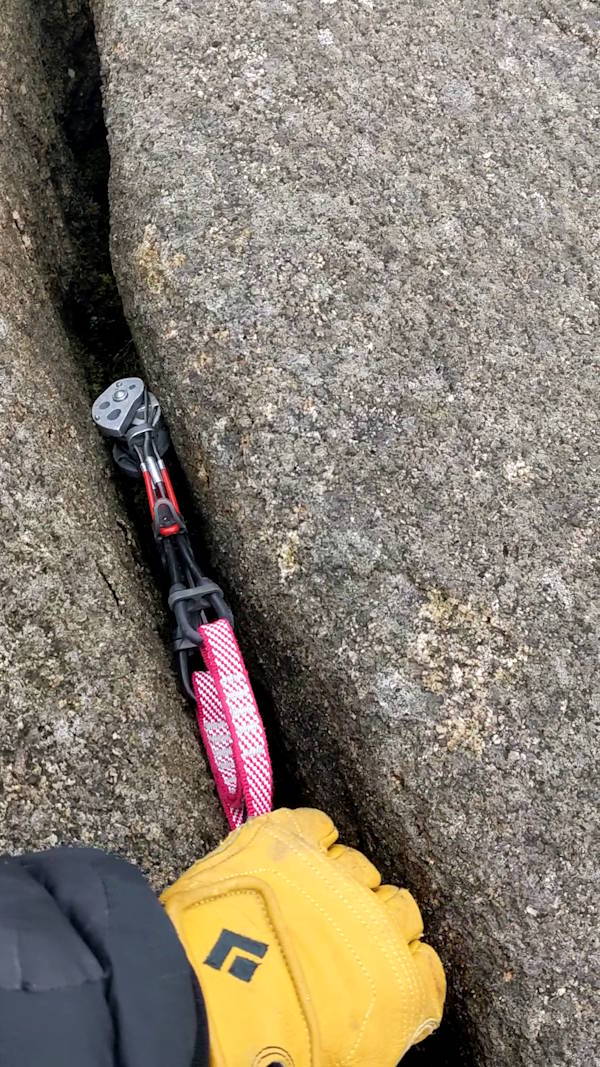
The brand Totem originally had 2 types of cam, the “Basic” which was based on the design of alien cams and their normal Totem with its independent loading cam lobes. Totem don't seem to make the basic anymore, but their current cams are brilliant. They have 2 selling points over normal camms. Firstly their head is slightly narrower which means they can fit and hold where other cams might not and secondly they distribute load onto each lobe independently and have a greater camming angle meaning they stay in place much more than other cams when placed, making them secure. You can also load 2Kn onto just half the cam heads. Not much good for trad climbing but it does make them good for aid or in an emergency / as part of a belay from above when there are not likely to be high forces on the gear. They also have a fully flexible stem making them more effective in horizontal breaks. They have some minor downsides. Notably, they are slightly heavier than similar size cams but only by a few grams. They have no passive strength like DMM cams so can't be placed in "umbrella mode” and finally they are in general more expansive than other cam brands. In my view they are worth it and are a top tier device.
| Specification | Value | Assessment |
|---|---|---|
| Weight | 69 - 144 g | Weighty |
| placement Range | 12 - 64 mm | Good |
| Single Range Flexibility | 7 - 24 mm | Good |
| Typical Strength | 6 to 13Kn | Decent to Very Good |
| Typical cost (2025) | £100 | Expensive |
Tricams / Abalak D Tier / Bad
- ✅ Strong
- ✅ Partially active
- ✅ Versatile
- ✅ Narrow head
- 🛑 More expensive than nuts
- 🛑 Hard to remove
- 🛑 Hard to place well
- 🛑 Can tip or twist out of position in bad placements
- 🛑 Not light at large sizes
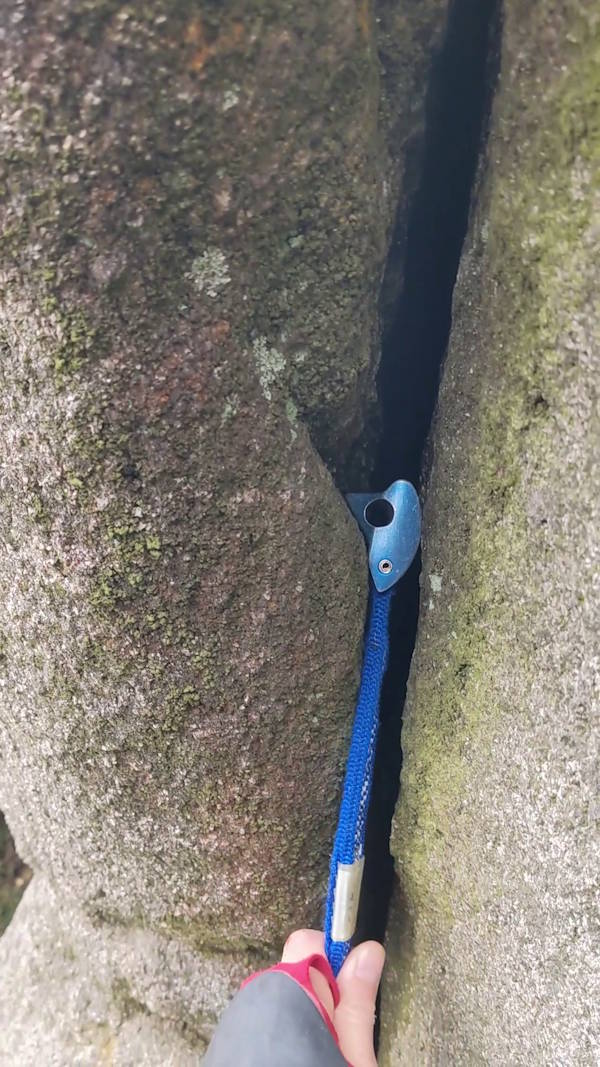
Tri-cams offer some strong advantages over both nuts and cams on paper. In addition, there are some places where nothing but a tri-cam will fit. That said they have some significant disadvantages that mean they remain a niche piece of gear for many climbers. They work by wedging the spike, usually point down, in a crack or pocket with the sling running down over the back of the tri-cam between the other 2 metal ribs. This creates three points of contact with the rock (Tri) and will generate a camming (cam) motion when they catch a fall, hence the name. The key advantages are: they are cheaper than cams (although more expensive than nuts), they have a narrow head making them work in small pockets. The spike also means they can work in odd shaped placements because only one small part of the rock needs a viable surface. They can also be used passively like a nut. However, their downsides are many. They are fiddly and slower to place, even once you have got used to them. They also have a tendency to get stuck in a way that means they are unlikely to catch a fall, but also hard to correct or remove. A nut key is almost always essential to removing them, and sometimes even placing them. There is also a risk they tip over if not placed and loaded correctly, making them marginal where a cam might be better.
| Specification | Value | Assessment |
|---|---|---|
| Weight | 10 - 287 g | Okay to Weighty |
| placement Range | 10 - 140 mm | Good |
| Single Range Flexibility | 6 - 48 mm | Okay |
| Typical Strength | 3 to 15 Kn | Bad to Very Good |
| Typical cost (2025) | £25+ | Okay |